
A New Chapter Rooted in Community-Driven Change in North Carolina: Resourceful Communities Joins LegacyWorks Group
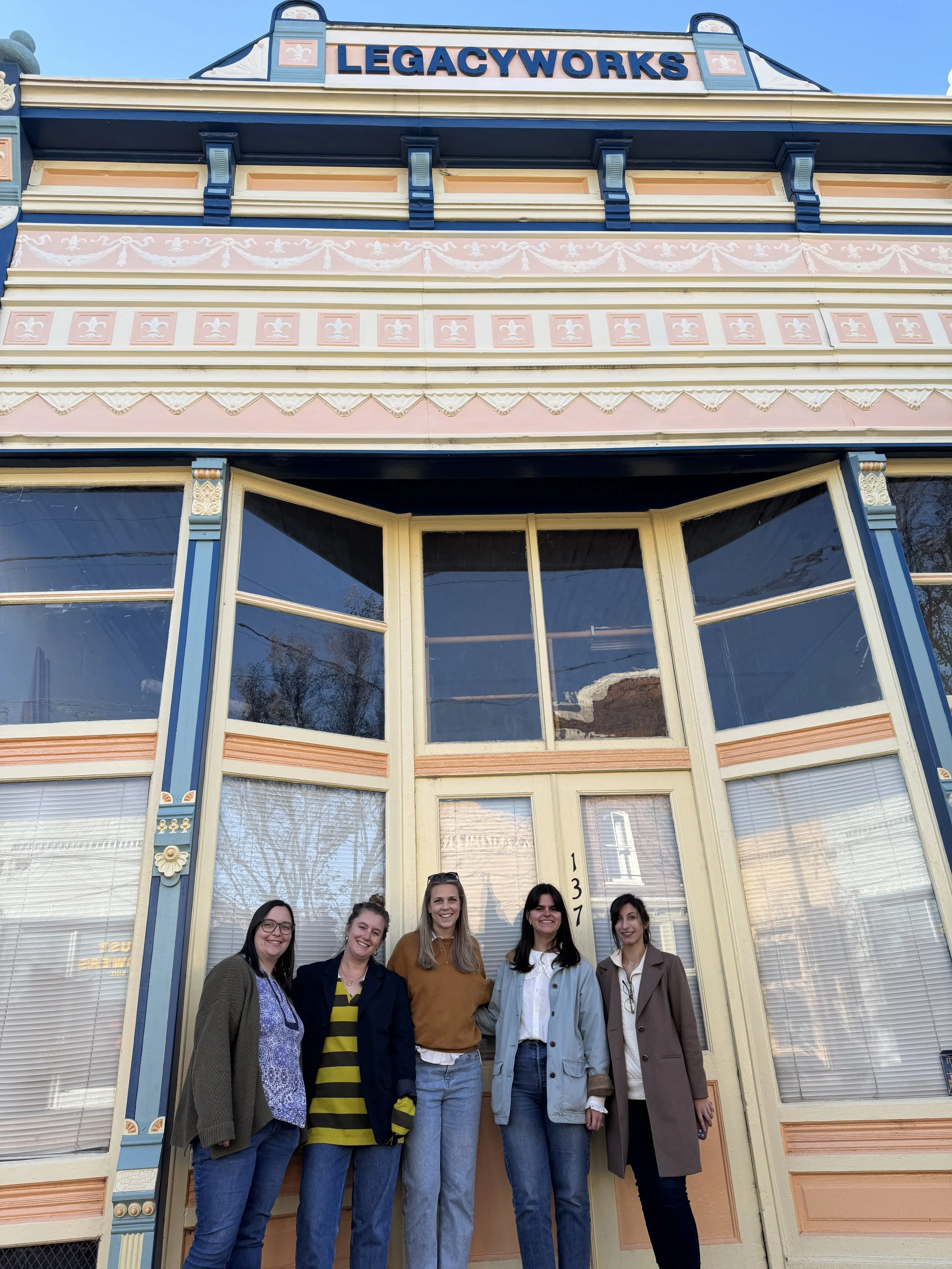
Salem Carriker, Jordan Rich, Ellen Snow, Marguerite Leek and Olivia Percoco in Warrenton, NC.
After more than 35 years supporting grassroots leadership across rural North Carolina, Resourceful Communities is entering a new chapter—one grounded in continuity, shared values, and expanded capacity for the future.
Founded within The Conservation Fund in 1991, Resourceful Communities annually works alongside a network of more than 300 grassroots organizations, churches, and small towns to advance economic, environmental, and social justice outcomes in rural places. Through programs focused on food systems, health, faith, land, and environmental resilience, Resourceful Communities has helped rural leaders preserve landscapes, strengthen local economies, and celebrate the cultures that define their communities across North Carolina.
As the team reflected on how best to sustain and grow this work for the long term, they sought a nonprofit home aligned not just in mission, but in practice. That search led to LegacyWorks Group, where a shared commitment to community-driven work that centers capacity building spans the United States and Mexico.
“We are thrilled to welcome Resourceful Communities to LegacyWorks,” said Carl Palmer, Founder of LegacyWorks Group. “Their team supports a remarkable array of grassroots organizations and coalitions building resilience and community leadership capacity across North Carolina. We’re honored to support the team, their partners, and the rural communities they serve.”
The transition follows a thoughtful period of collaboration and planning among Resourceful Communities, LegacyWorks Group, and The Conservation Fund—reflecting a shared commitment to ensuring the continuity of this critical work into the future.
For Resourceful Communities Initiative Director Monica McCann, the move represents both gratitude and momentum. “We are deeply grateful for the 30+ years of support from The Conservation Fund, whose leadership nurtured Resourceful Communities from its inception,” Monica shares. “We are equally excited and hopeful for what lies ahead with LegacyWorks Group—new opportunities, new relationships, and renewed energy to carry this work forward.”
Joining LegacyWorks Group strengthens the foundation beneath Resourceful Communities—providing expanded organizational capacity, shared learning, and new opportunities to connect with peer initiatives beyond North Carolina. For LegacyWorks, the partnership deepens engagement in rural North Carolina by integrating Resourceful Communities’ trusted grassroots capacity-building model and their unique role as a vital bridge between private foundations and rural community organizations.
Resourceful Communities founder and former director Mikki Sager reflected on the values that guided the transition when she joined the LegacyWorks board recently. “Resourceful Communities needed an organizational home that centers people and communities as experts of their own lived experience,” Mikki says. “LegacyWorks takes a holistic, facilitative approach to working with rural communities, understanding that healthy ecosystems depend on the health and vitality of rural people.”
Looking ahead, LegacyWorks and Resourceful Communities see huge potential in learning and growing together. “LegacyWorks and Resourceful Communities each bring complementary strengths,” Mikki adds. “Sharing lessons across communities and cultures can grow community power and amplify impact well beyond any single geography.”
As Resourceful Communities begins this next chapter within LegacyWorks Group, its mission remains unchanged: supporting rural leaders in building resilient, just, and vibrant communities. What grows is the capacity to do that work—strengthened by partnership, shared infrastructure, and a long-term commitment to community-led change.