
Readying for When the Water Runs Low: The Snake River Headwaters Symposium
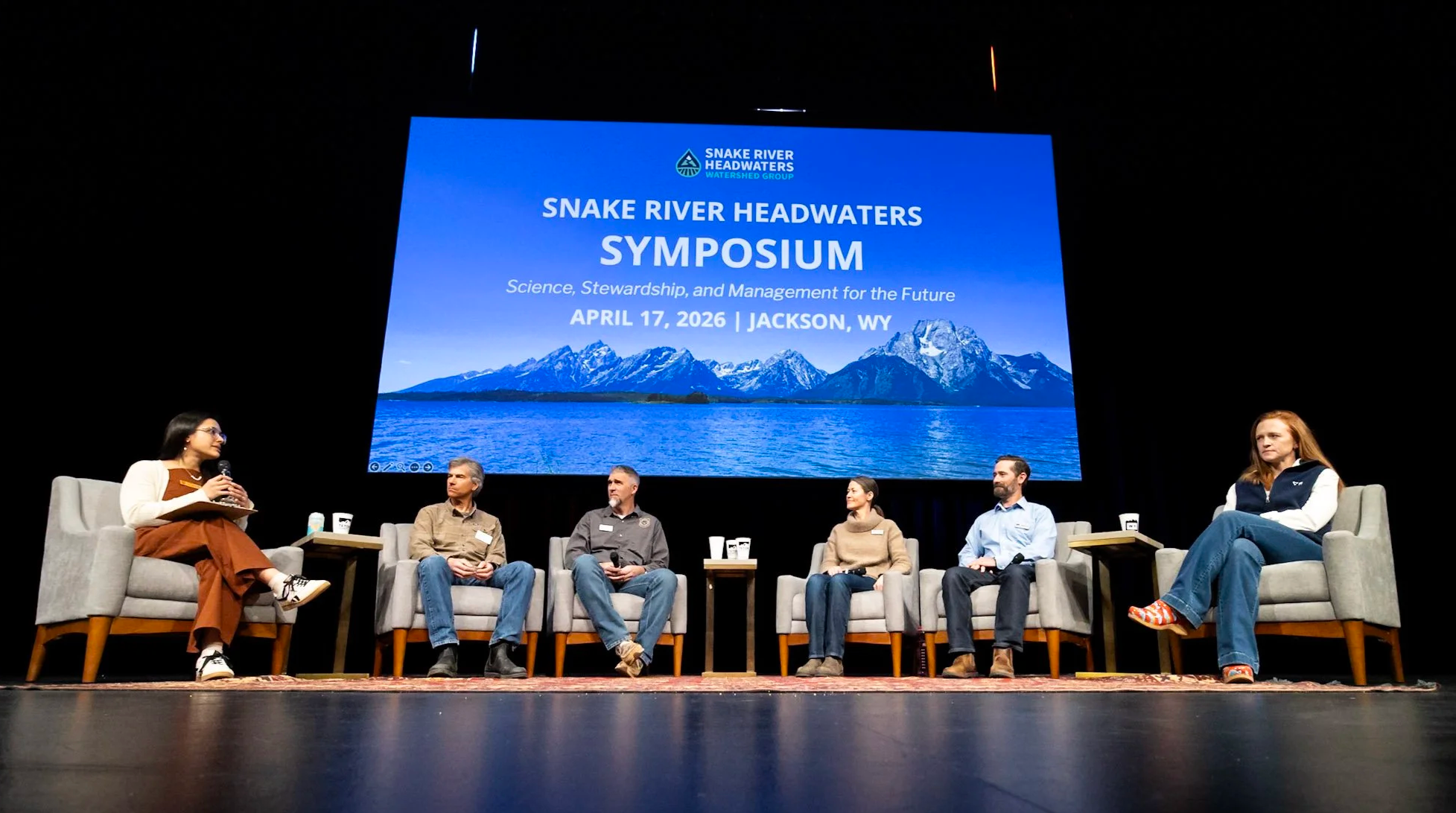
Julie Gonzalez on the left concluding the symposium with her fellow SRHWG Steering Committee members, sharing thoughts on how the day's lessons and topics can inform the SRHWG's future direction | Photo by Josh Mueller
The air inside the Center for the Arts in Jackson, Wyoming carried a quiet sense of purpose. Beneath the house lights sat fly-fishing guides in flannel, third-generation farmers, Tribal leaders, nonprofit staff, and government officials—all connected by the same river, though rarely gathered in the same room. Together, they represented the human fabric of the Snake River watershed.
“When you begin to look at a river system, you gain an awareness of its vulnerability and the massive responsibility,” keynote speaker of the Snake River Headwaters Symposium, Kevin Fedarko, told the audience. “That is why we need gatherings of people who get together not just to listen, but to break bread, exchange ideas, and build relationships to form community.”
That vulnerability became painfully clear for the Snake River during consecutive water crises in 2021 and 2023. A volatile mix of low precipitation, infrastructure maintenance, and sudden personnel changes at Jackson Lake Dam pushed river flows toward historic lows. The events strained communication across the watershed, disrupted the local economy, and threatened the aquatic ecosystem—revealing how fragile the region’s coordination systems had become in moments of crisis.
In response, the Snake River Headwaters Watershed Group (SRHWG) launched in 2023 to build what collaborative members describe as an “infrastructure of trust.” The year-round network now connects more than 300 individuals and 100 organizations, including landowners, irrigators, scientists, nonprofits, and government agency representatives. Guided by a 15-member steering committee and facilitated by LegacyWorks, SRHWG channels collaboration through working groups focused on water management, ecosystem health, data tracking, and community outreach.
With climate forecasts pointing toward another severe drought season, SRHWG envisioned a gathering that could move the watershed from reactive crisis management toward coordinated preparedness. The Snake River Headwaters Symposium was designed as a kind of “neutral loom,” weaving scientific research, cultural knowledge, and lived experience into a shared understanding of the river’s future. By putting technical data and personal stories on the same stage, the symposium fostered the relationships and trust needed to make collective decisions before a disaster strikes.
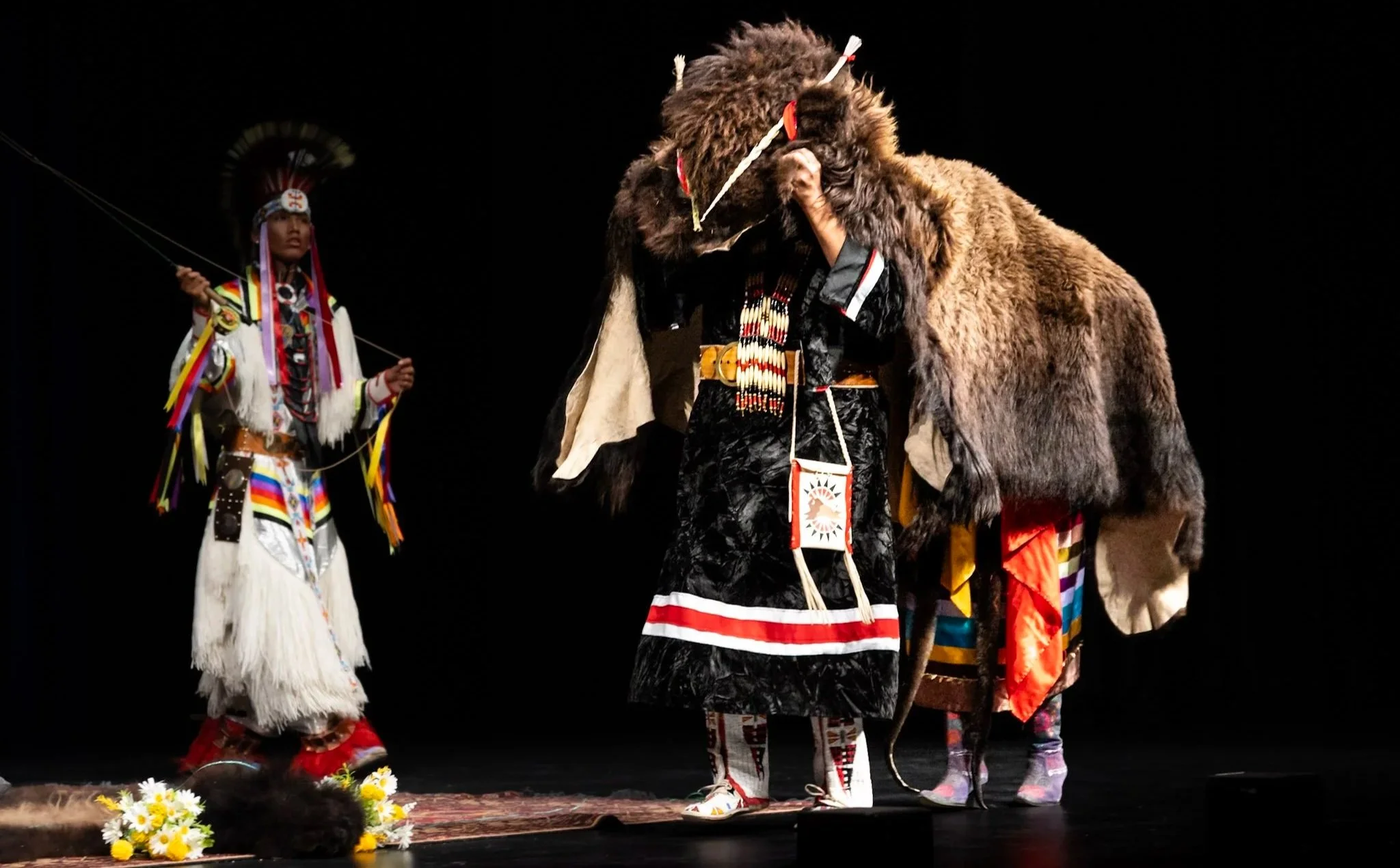
Patti Baldes and her family perform, ReMatriate, a cultural performance honoring the buffalo's relationship with the land and people, incorporating voices from the watershed's original stewards | Photo by Josh Mueller
Julie Gonzalez, Teton Regional Initiative Project Manager at LegacyWorks, was the architect of the event, weaving a space structured to bring the watershed’s separate threads to the same podium. The SRHWG Steering Committee recognized that bridging these vantage points required a physical and intellectual scaffolding where the Snake River community could rise above their fragmented daily operations. By carefully curating the program's progression, Julie provided the space needed to align these separate perspectives, transforming disconnected information into a shared reality. Taking the SRHWG Steering Committee’s vision, she patterned the agenda around an impactful handoff, anchoring the room in local livelihoods to give the scientific data immediate relevance, weight, and warning.
That sequencing became clear when Jeff Van Orden, an Idaho potato farmer from the Committee of Nine, spoke about his family farm. For Van Orden, water rights are not abstract policy debates—they are the infrastructure that keeps crops alive and determines whether a family survives the season. A single summer drought can erase an entire year of income.
"I take great pride in being a grower – knowing that potatoes I grow end up on dinner plates all over this country,” Jeff shared. “That knowledge and expertise is passed down through generations and also the stewardship over this precious resource of water. Without water we are nothing."
Immediately afterward, University of Wyoming climate scientist Dr. Bryan Shuman presented data showing how rising temperatures are causing mountain snowpack—the West’s natural reservoir—to melt earlier each year, leaving steep declines in water availability by late summer. Because the audience had already heard the human stakes, the science landed differently. The projections no longer felt distant or theoretical; they validated the fears and realities already described from the ground.
The symposium also recognized that long-term resilience depends on expanding who is included in watershed leadership. Organizers emphasized the importance of intentionally bringing in historically underrepresented voices, including the Shoshone-Bannock and Northern Arapaho Tribes and Jackson Hole’s Latino community, so that the region’s shared vision truly reflects everyone who depends on the river.
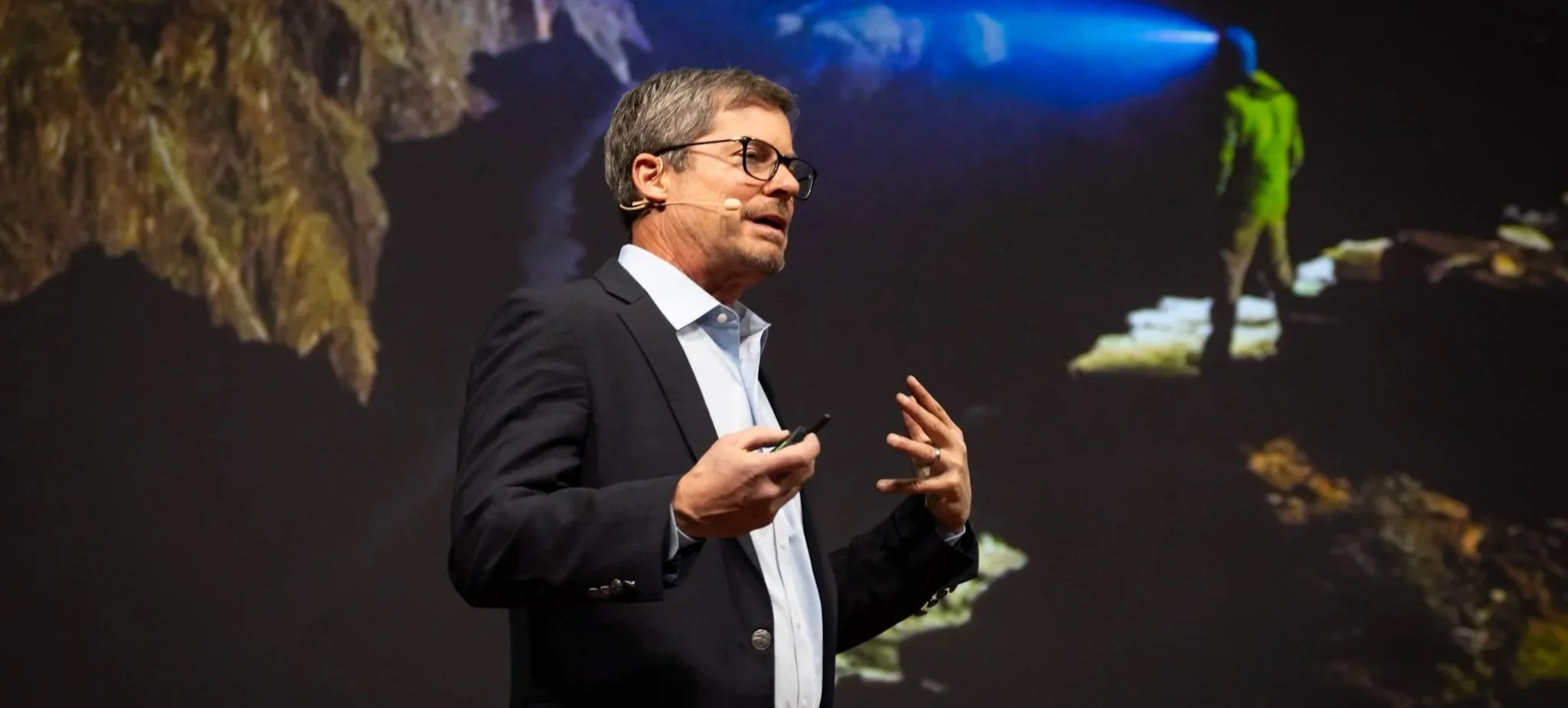
Acclaimed author, Kevin Fedarko, provides an inspirational keynote based on his experience in the Colorado River and traversing the Grand Canyon by foot over a 14-month journey | Photo by Josh Mueller
As the event progressed, the focus shifted from understanding problems to practicing collaboration. “True collaboration is not an innate response; it is a complex skill that must be deliberately practiced,” explained Amy Verbeten, Teton Regional Initiative Director of LegacyWorks Group. Through facilitated discussions and shared problem-solving exercises, participants rehearsed how to respond collectively to future water challenges. The symposium transformed tension into coordination, helping build the relationships that communities rely on when conditions worsen.
The gathering ultimately brought together 35 speakers and roughly 600 participants, drawing broad public engagement from across the region. By combining data from the Bureau of Reclamation, USGS, and the University of Wyoming with the lived experiences of Tribal leaders, fishing outfitters, ranchers and farmers, the symposium replaced fragmented conversations with a more unified regional dialogue. The expanded network has already sparked plans for a future convening in Idaho aimed at managing the Snake River as a connected system rather than a series of isolated jurisdictions.
The shift marks a broader change in how the watershed approaches resilience—not as a reactive scramble during emergencies, but as an ongoing practice of coordination and trust-building. As Julie reflected, “True resilience is not found in a better spreadsheet; it is found in a community that looks at the exact same map and possesses the woven relationships required to use it.” Because those relationships were strengthened before the next crisis arrives, the Snake River watershed community is better prepared to face the river’s uncertain future together.